
By associate member Chesa Keane
One never knows when the rains will come.
We do not choose the moment when our hair turns gray, our steps slow, or the world begins to see us as “old.” Nor do we always recognize the moment when we begin to look at someone older and quietly assume that their best years are behind them. Yet that is often how ageism begins—not only in laws or institutions, but in habits of thought so common that they pass unnoticed.
Ageism is one of the most accepted forms of prejudice in modern life. Older adults experience it when they are overlooked, patronized, or treated as if their greatest value lies in the past. Their wisdom may be acknowledged politely but ignored in practice. Their experience is honored ceremonially but not always invited into real decision-making. Over time, these small assumptions add up. They can diminish confidence, narrow opportunity, and quietly push people to the margins long before they are ready to step aside.
But ageism does not harm only those who are older. It also stifles the young. When younger people dismiss older adults as out-of-date or no longer relevant, they cut themselves off from perspective, resilience, judgment, and memory that only time can give. They lose access to lessons that cannot be learned quickly, searched online, or improvised in the moment. A society that teaches the young to undervalue age also teaches them to undervalue their own future selves.
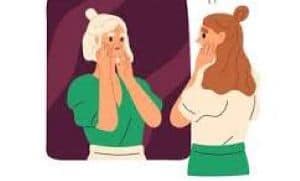 That may be the deepest cost of all. If aging is seen only as decline, then younger people inherit a fearful and diminished image of the life ahead of them. They are taught to resist age rather than grow into it, to fear becoming what, if they are fortunate, they will one day be. This impoverishes not only individuals, but communities. It weakens mentorship, shrinks fellowship, and encourages a shallow understanding of what human worth really is.
In Rotary, and especially in a club like the Rotary Club of Global Travelers, we have an opportunity to model something better. We are at our best when we value contribution over stereotype, wisdom over assumption, and human dignity over cultural bias. Older members deserve more than gratitude for the past; they deserve voice, respect, and a meaningful place in the present. Younger members deserve more than encouragement; they deserve a culture that teaches them to see aging not as a burden, but as part of a full and useful life.
One never knows when the rains will come. Illness, loss, limitation, and the passage of years arrive for all of us, each in their own time. The question is what kind of world we will help build before they do. If we challenge ageism now, we create a more generous future—not only for older adults, but for everyone who hopes to grow older with dignity. Ageism is often treated as a minor social issue, something unfortunate but not especially urgent. In truth, it is one of the most accepted forms of prejudice in modern life. Anti-aging slips into everyday conversation, workplace decisions, family roles, medical care, and even the ways communities imagine leadership, usefulness, and belonging. Because it is so familiar, people often fail to see it. Yet its effects are real, and they touch not only older adults, but younger people as well.
 Most people think of ageism as a problem only for those who are already old. Certainly, older adults bear its heaviest burdens. They are too often overlooked, patronized, discounted, or pushed to the margins. Their knowledge may be praised in theory but ignored in practice. Their experience is treated as something nostalgic rather than necessary. In the workplace, in public life, and sometimes even in families, older people can begin to feel that their value is shrinking before they are gone. That loss is not only practical; it is deeply personal. It affects confidence, dignity, independence, and the sense that one still has a rightful place in the human conversation.
Ageism rarely announces itself in dramatic terms. More often, it appears in quiet assumptions. Someone older is described as “still sharp,” as if competence at a later age is surprising. An older person is not asked to take on new responsibility because others assume the desire or capacity is no longer there. A person’s wisdom is welcomed in ceremonial moments, but not in actual decision-making. These gestures may seem small, but together they send a powerful message: your season of significance is ending.
That message does damage. It can cause older adults to withdraw from opportunities they would otherwise embrace. It can make people second-guess their own abilities. It can also distort the way society allocates respect. Instead of asking what a person can contribute, communities begin asking whether that person has passed some invisible expiration date. This is a cruel standard, and one that none of us escapes forever.
But the harm does not stop there. Younger people are also stifled by ageism, even when they do not realize it. When younger adults dismiss older people as out-of-date, slow, or irrelevant, they cut themselves off from one of the richest sources of learning available to them. They lose access to long memory, tested judgment, resilience shaped by difficulty, and perspective earned over time. In every profession, every family, and every service organization, there are lessons that cannot be downloaded quickly or improvised on the spot. They are handed down through listening, observation, and respect.
 In a Rotary club, this matters greatly. Rotary depends on the exchange of ideas, on mentorship, on shared work across generations, and on the conviction that each person brings something of value to the table. In a club like the Rotary Club of Global Travelers, where curiosity, service, and human connection are central, ageism works against the very spirit the club hopes to embody. It tempts members to sort one another too quickly: the older member as someone to honor politely, the younger member as someone to encourage, but not yet fully trust. Both assumptions are limiting. Both diminish fellowship.
A healthier view begins with a simple truth: every stage of life carries both vulnerability and value. Older people are not meaningful only because they were once young. They are meaningful now. Younger people are not valuable only because they represent the future. They are valuable now as well. When generations meet each other with respect rather than suspicion, something larger becomes possible. Experience gains new energy. Youth gains depth. Communities become wiser, not just busier.
The challenge, then, is not simply to be kinder to older adults, though kindness matters. The deeper challenge is to reject the habit of measuring human worth by age at all. A just community does not ask whether someone is too old to matter or too young to understand. It asks what gifts, insights, and capacities this person brings in this moment.
One never knows when the rains will come. None of us knows when illness, loss, limitation, or simply the passage of years will place us on the receiving end of the assumptions we once made about others. That is one reason ageism deserves attention now. It is not somebody else’s issue. It is a test of what kind of society, and what kind of fellowship, we are building together.
If Rotary stands for service above self, then part of that service is learning to see one another more truthfully. Older adults deserve more than gratitude for the past; they deserve respect, inclusion, and real voice in the present. Younger adults deserve more than encouragement; they deserve the chance to grow in a culture that teaches them not to fear age, but to understand it as part of a full human life. When that happens, everyone benefits.